An industrial macaroni cooling and packing handoff should be specified as a controlled transfer, not as two equipment names placed next to each other. The buyer needs to define what leaves the dryer, how it is cooled and conveyed, what condition the packing system expects, and where each supplier's responsibility begins and ends.
This guide applies to complete industrial macaroni and short-cut pasta projects in the confirmed 100–500 kg/h range. It does not describe a compact 15 or 40 kg/h machine, a spaghetti line or an instant-noodle line. Final equipment, output and packing scope remain product- and project-specific.
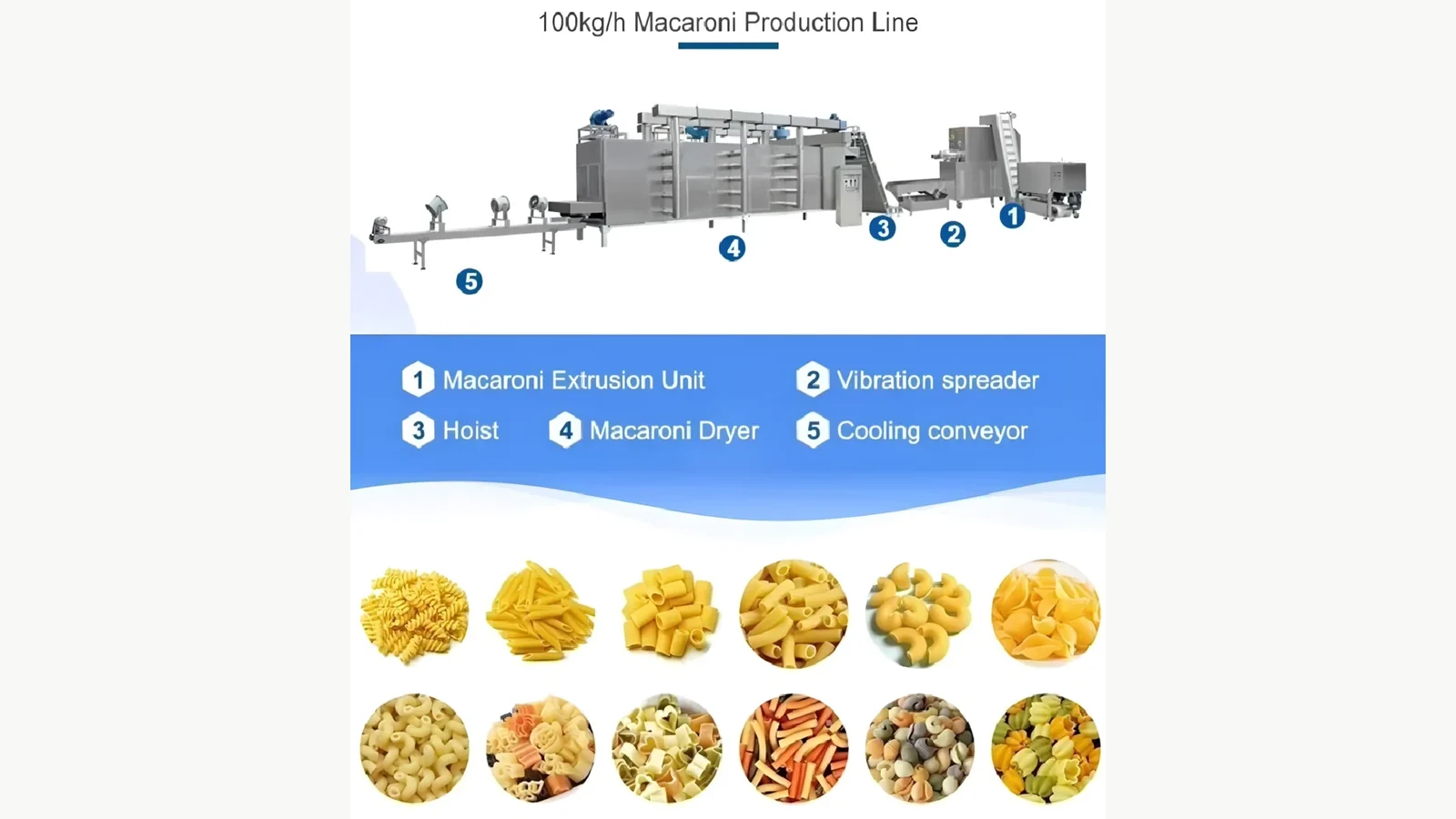
Start at the Dryer Discharge
The handoff begins with the product condition at the dryer outlet. Record the pasta profile, dimensions, formula status, target product condition, expected discharge pattern and the agreed basis for the line flow. If several shapes will run on the same project, list them separately because their handling and accumulation behavior may differ.
The complete industrial macaroni production line confirms the core route: flour preparation, mixing, feeding, extrusion, forming, cutting, drying, cooling and packing. It anchors the discussion to the correct industrial product family without proving one universal conveyor or packaging configuration.
Dryer discharge conditions should be agreed during the technical review. A product description such as “dry pasta” is too broad for an interface specification. The parties should identify which measurements or observations establish that the product is ready to enter cooling, while keeping final settings tied to the actual formula and trial.
Define What Cooling Must Deliver
Cooling is the bridge between controlled drying and stable downstream handling. Its job in the project brief is to deliver product to the next stage under agreed conditions. The specification should name the incoming state, intended discharge state, line flow, available distance and the packing-system requirement.
The industrial pasta drying guide explains why drying settings and acceptance remain product-specific. The cooling brief should use that approved dryer-discharge basis rather than assuming a fixed temperature or time from another line.
Use a handoff table:
| Interface item | Buyer or technical input | Quotation output |
|---|---|---|
| Pasta profile | Sample, photos and dimensions | Product used for the handling review |
| Dryer discharge | Agreed condition and flow pattern | Cooling inlet basis |
| Cooling target | Buyer-defined packing readiness checks | Cooling outlet basis |
| Transfer | Elevation, direction and available length | Conveyor and support scope |
| Buffer | Product-change and packing-stop scenario | Included or excluded accumulation plan |
| Packing feed | Hopper height, inlet requirement and control signal | Mechanical and control boundary |
This approach replaces “add a cooling conveyor” with measurable project interfaces.
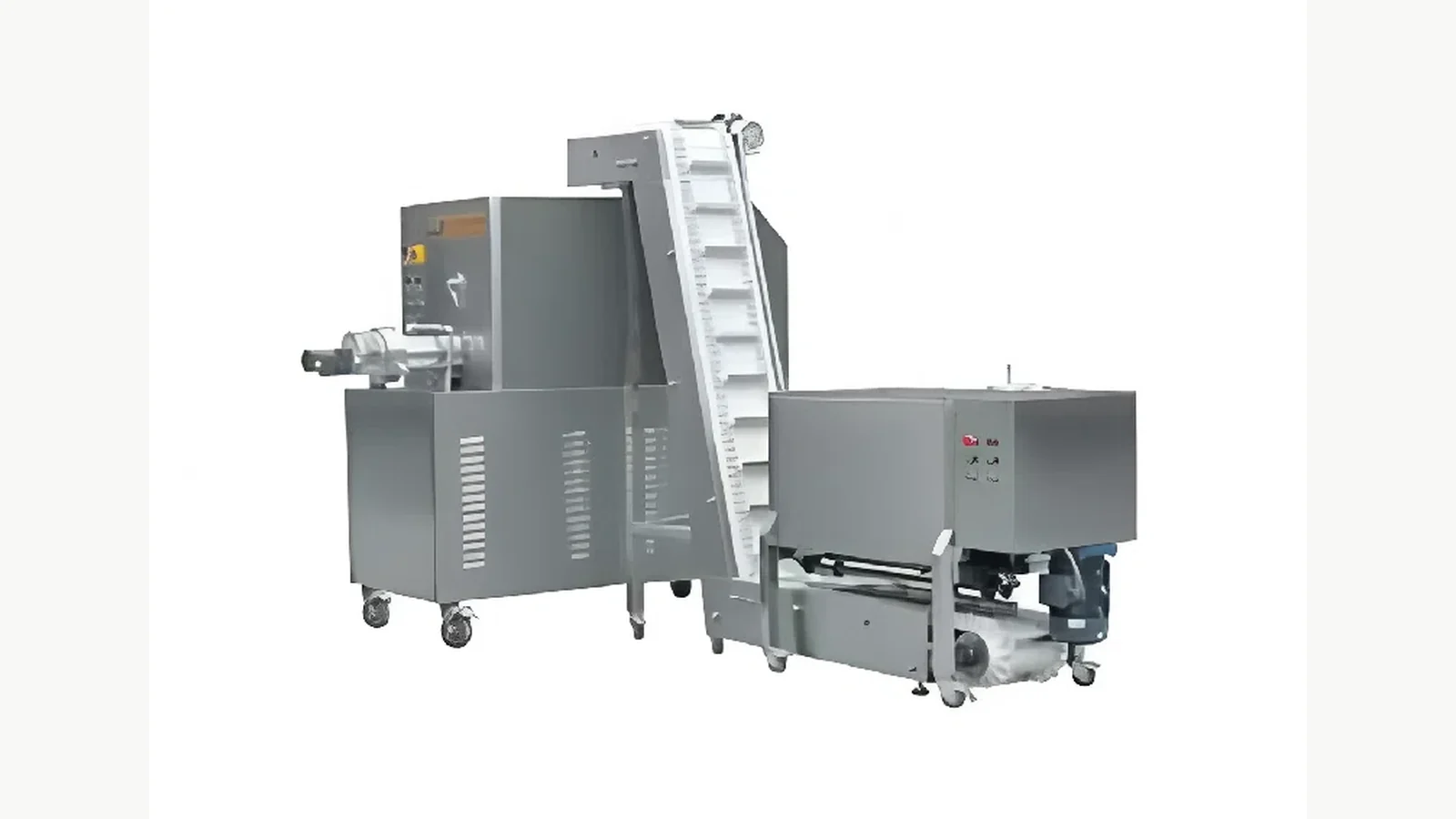
Match the Packing Format to the Product Brief
Before a packing system is selected, state the sales format. Record the pack type, target net-weight range, product profile, packaging material status, label or coding needs and whether secondary packing belongs to the requested scope. Exact packing speed, accuracy and pack compatibility require confirmation from the selected packing-equipment supplier.
Short-cut pasta can include profiles with different dimensions and fragility. The same nominal line output may create different handling or pack-count behavior across products. Ask vendors to identify the product and pack format behind every quoted performance figure.
Where packing is supplied by another company, provide its confirmed inlet drawing and operating requirement. Where one supplier quotes the complete project, require the proposal to show the same boundary rather than hiding it inside the phrase “complete line.”
Plan for Stops, Buffers, and Product Changes
Packing equipment can pause while upstream equipment is still running. The project team should review the intended response to short stops, longer stops and product changes. Possible actions depend on the actual line design; the RFQ should request the proposed control sequence and responsibility boundary rather than prescribing an unsupported universal solution.
Record how product will be identified during changeovers, how mixed product is prevented or segregated, and who releases the line after cleaning. The buyer's food-safety and traceability procedures remain part of the acceptance plan.
Useful questions include:
- What signal links the cooling discharge to the packing feed?
- Which stage slows or stops first under a packing interruption?
- Is any buffer included, and what tested condition supports it?
- How are different shapes or formula lots kept identifiable?
- Which access points support cleaning and inspection?
- Which alarms, sensors and controls are supplied by each party?
Balance the Section Around Finished Output
The published TXF100, TXF200, TXF300 and TXF500 references cover industrial complete-line projects from 100 to 500 kg/h. Those names help frame capacity selection, but they are not guarantees of packed output for every shape, formula and operating schedule.
Balance dryer discharge, cooling transfer and packing around the same product basis. Include productive hours, cleaning, planned stops and changeovers. When quotations use different assumptions, place them on one comparison sheet before evaluating price.
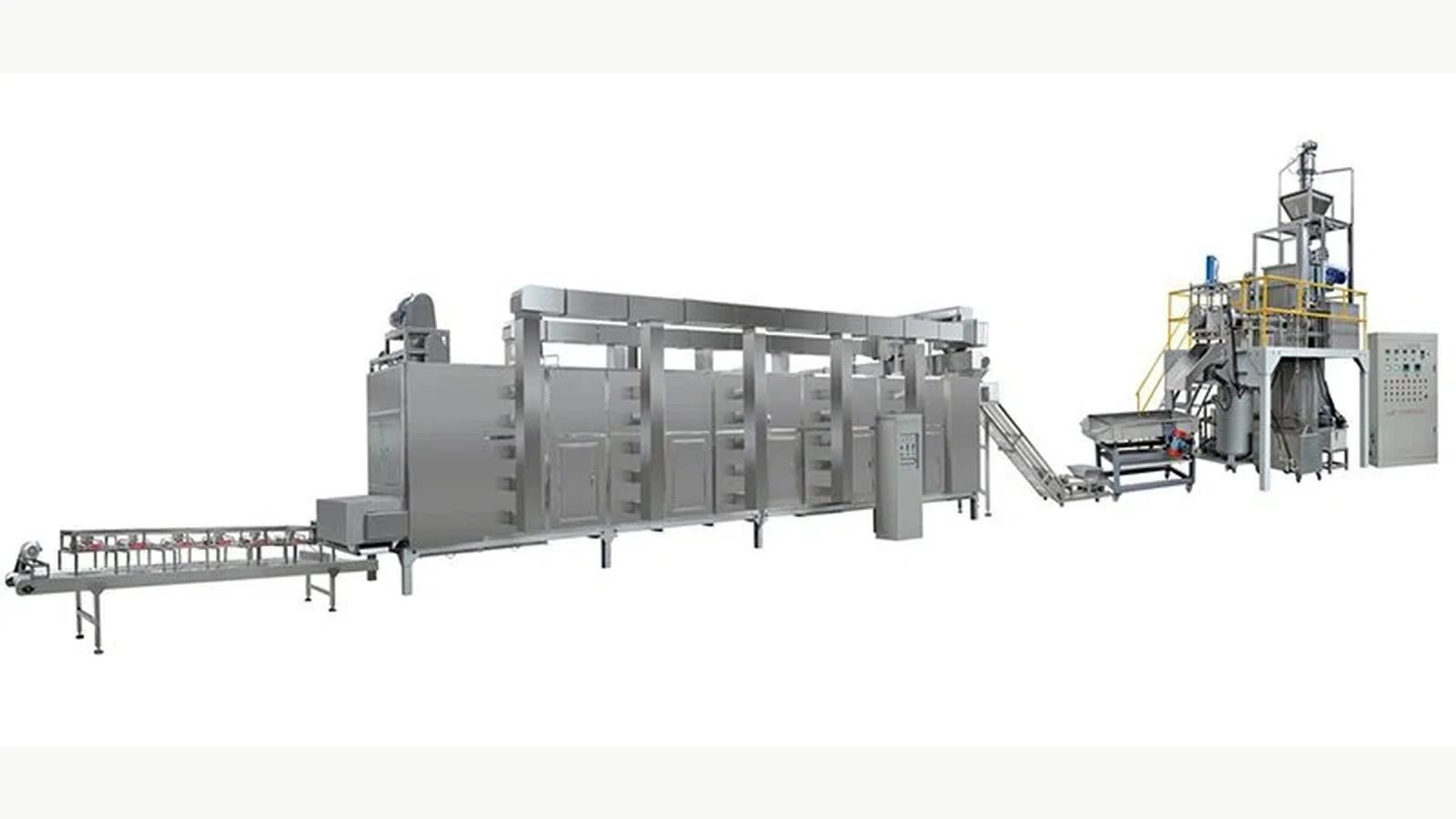
Approve the Handoff with Traceable Evidence
A representative trial should carry one product identity from dryer discharge through cooling and the packing interface. Label the formula revision, mold or shape, test flow and inspected conditions. Record product observations at cooling inlet and outlet, transfer behavior, damaged-piece sampling and the packing feed response.
Acceptance should refer to the tested product and agreed method. A successful run for one short-cut profile does not establish performance for every profile or package. Retained samples, photos and signed records keep the later production discussion tied to real evidence.
RFQ Checklist for Cooling and Packing Interfaces
Provide:
- macaroni or short-cut pasta sample, photos and dimensions;
- formula status and planned product matrix;
- dryer discharge condition and flow basis;
- buyer-defined packing-readiness checks;
- required hourly output and operating schedule;
- cooling conveyor direction, elevation and available footprint;
- short-stop, long-stop and buffer scenarios;
- pack type, net-weight range and packaging-material status;
- packing inlet drawing and control requirements where available;
- cleaning, traceability and changeover expectations;
- destination, voltage, frequency, phase and supply boundary;
- proposed trial and acceptance record.
Send that package through the contact page for an industrial cooling, transfer and packing-interface review. The proposal should show confirmed equipment, optional packing scope, vendor boundaries and open confirmation items.