A macaroni factory should not select capacity from the extruder name alone. Monthly finished-product demand, productive operating time, shape changes, drying load and packing speed must describe the same production plan.
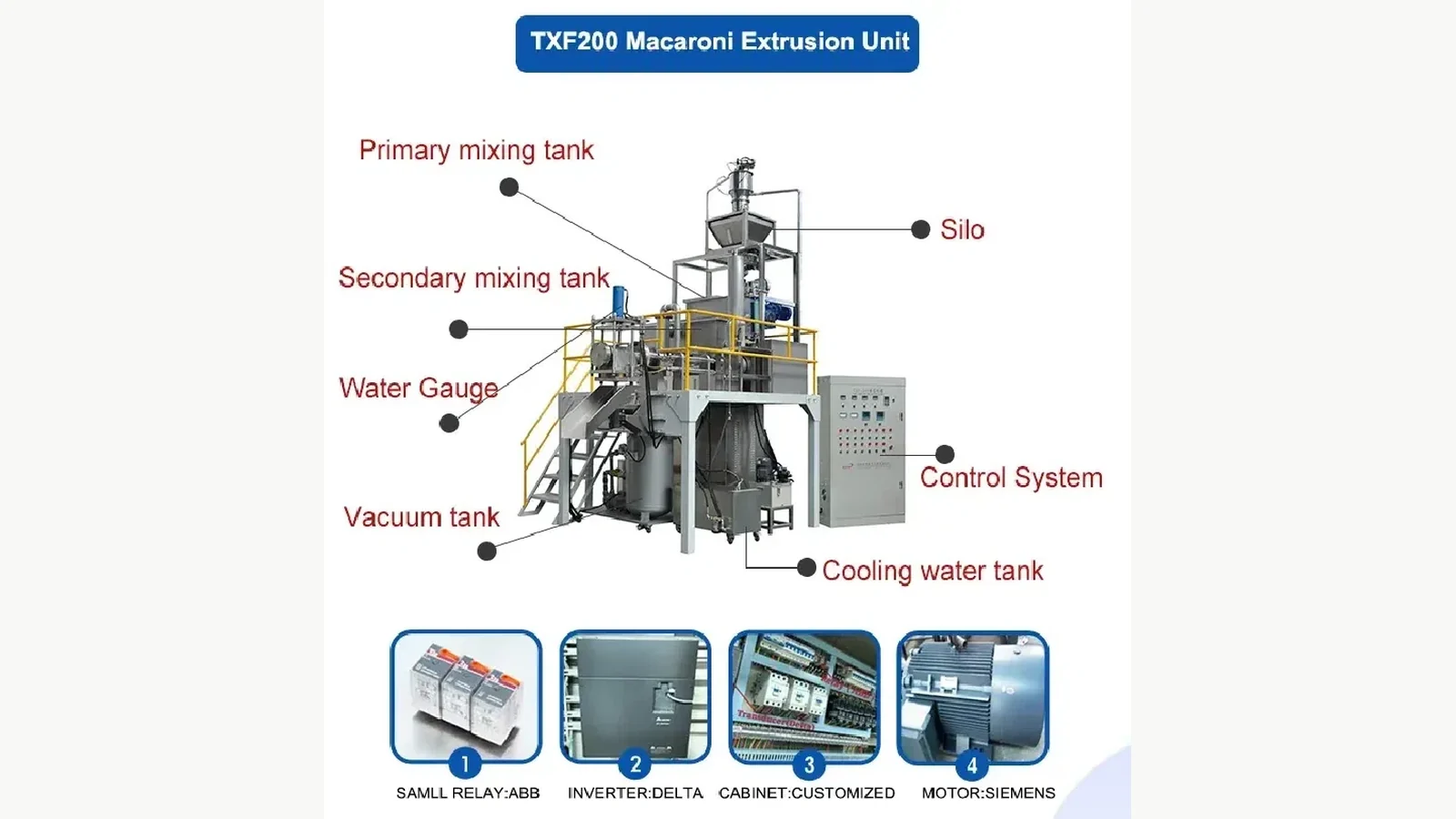
Zhuoheng’s current industrial range provides confirmed 100, 200, 300 and 500 kg/h reference points. The right starting model is the one that supports normal sales with a realistic operating allowance while keeping upstream and downstream equipment balanced.
Calculate Output From Finished-Product Demand
Begin with saleable kilograms per month. Divide by planned production days and productive hours, not the full clock time of a shift:
Required hourly output = monthly saleable output ÷ operating days ÷ productive hours per day.
Productive hours exclude start-up, shutdown, cleaning, mold change, recipe adjustment, maintenance and normal stops. A factory scheduled for eight hours may have substantially fewer hours producing stable, packable macaroni.
Suppose the sales plan requires 32,000 kg per month over 20 production days. At seven productive hours per day, the average requirement is about 229 kg/h. A 200 kg/h reference would not meet that plan without extra operating time. The buyer should compare a 300 kg/h configuration, a longer schedule or a revised demand assumption instead of hiding the shortfall in an optimistic utilization rate.
Calculate both the normal month and a defensible peak month. If peak demand is brief, seasonal overtime or finished-goods inventory may be more economical than permanent excess capacity.
Define Shapes and Formula Before Choosing a Model
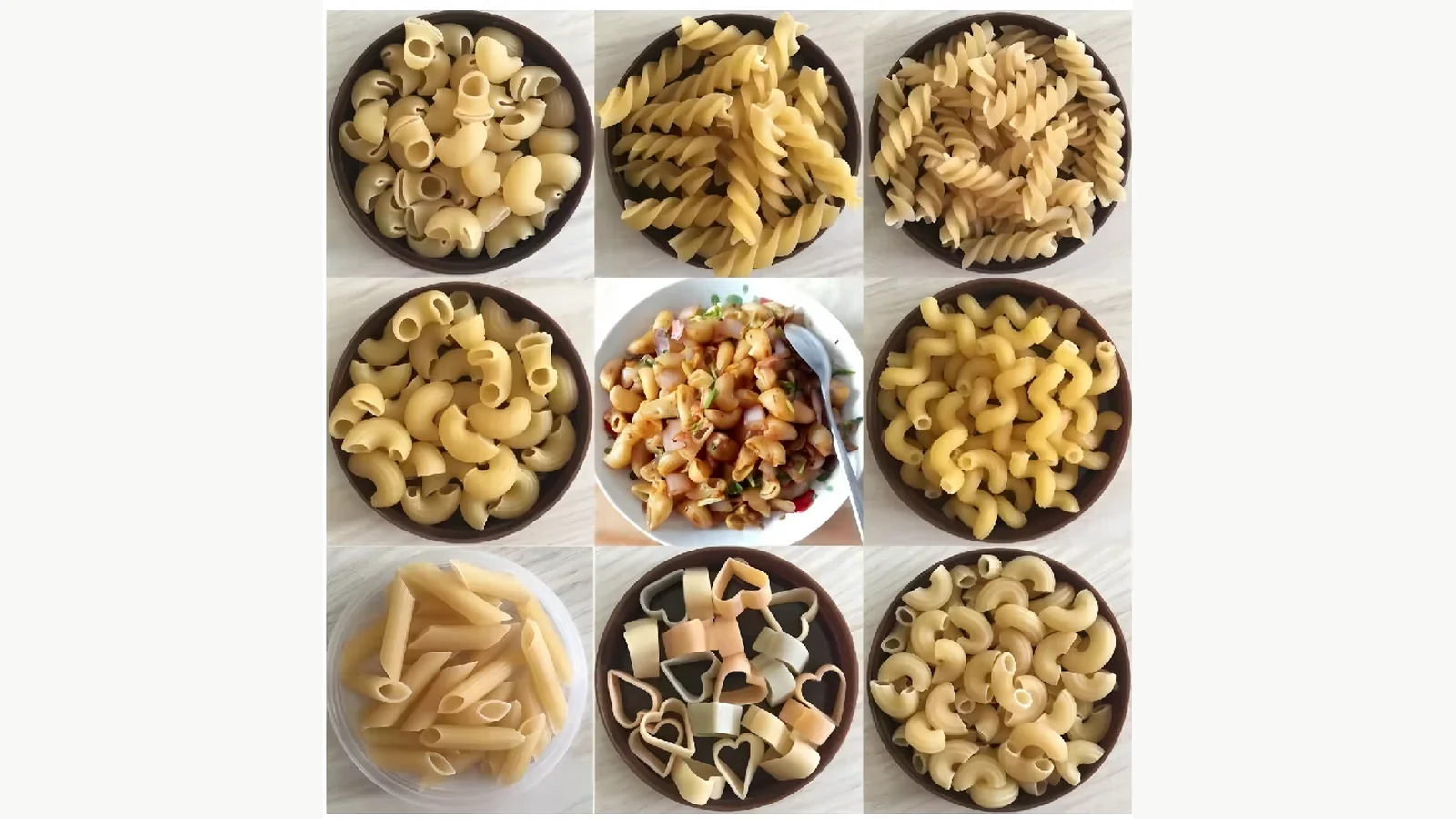
Penne, fusilli, shells and elbow macaroni create different production conditions. Shape dimensions, wall thickness, cut length, mold design and formula influence forming and drying behavior. A factory producing one stable item can run longer campaigns than a factory switching among many profiles.
Send the supplier target product photos, dimensions, annual mix and the wheat flour or semolina/durum formula. Note how often molds will change and whether changeovers happen within a shift. This information determines how much non-production time belongs in the capacity calculation.
The confirmed complete industrial macaroni production line covers the large-line entity discussed here. Compact 15 kg/h and 40 kg/h machines belong to a separate small-business range and should not be mixed into an industrial TXF comparison.
Compare the Four Confirmed Capacity References
| Model | Reference output | Installed power | Practical power |
|---|---|---|---|
| TXF100 | 100 kg/h | 42 kW | 25 kW |
| TXF200 | 200 kg/h | 88 kW | 52 kW |
| TXF300 | 300 kg/h | 98 kW | 58 kW |
| TXF500 | 500 kg/h | 130 kW | 78 kW |
These are reference complete-line values from the current project knowledge base. Final output and power follow the confirmed equipment list, product, voltage and factory conditions. Installed power describes connected load; practical power is a planning reference, not a fixed electricity bill.
The earlier article on macaroni production line cost explains why capacity, drying scope, automation and project services should be normalized before comparing commercial totals.
Treat Drying as a Capacity Decision
The forming section is only one part of saleable output. Macaroni must move through drying and cooling at a rate suitable for the chosen shapes and process. A dryer that cannot accept the forming load turns nominal extruder capacity into work-in-progress.
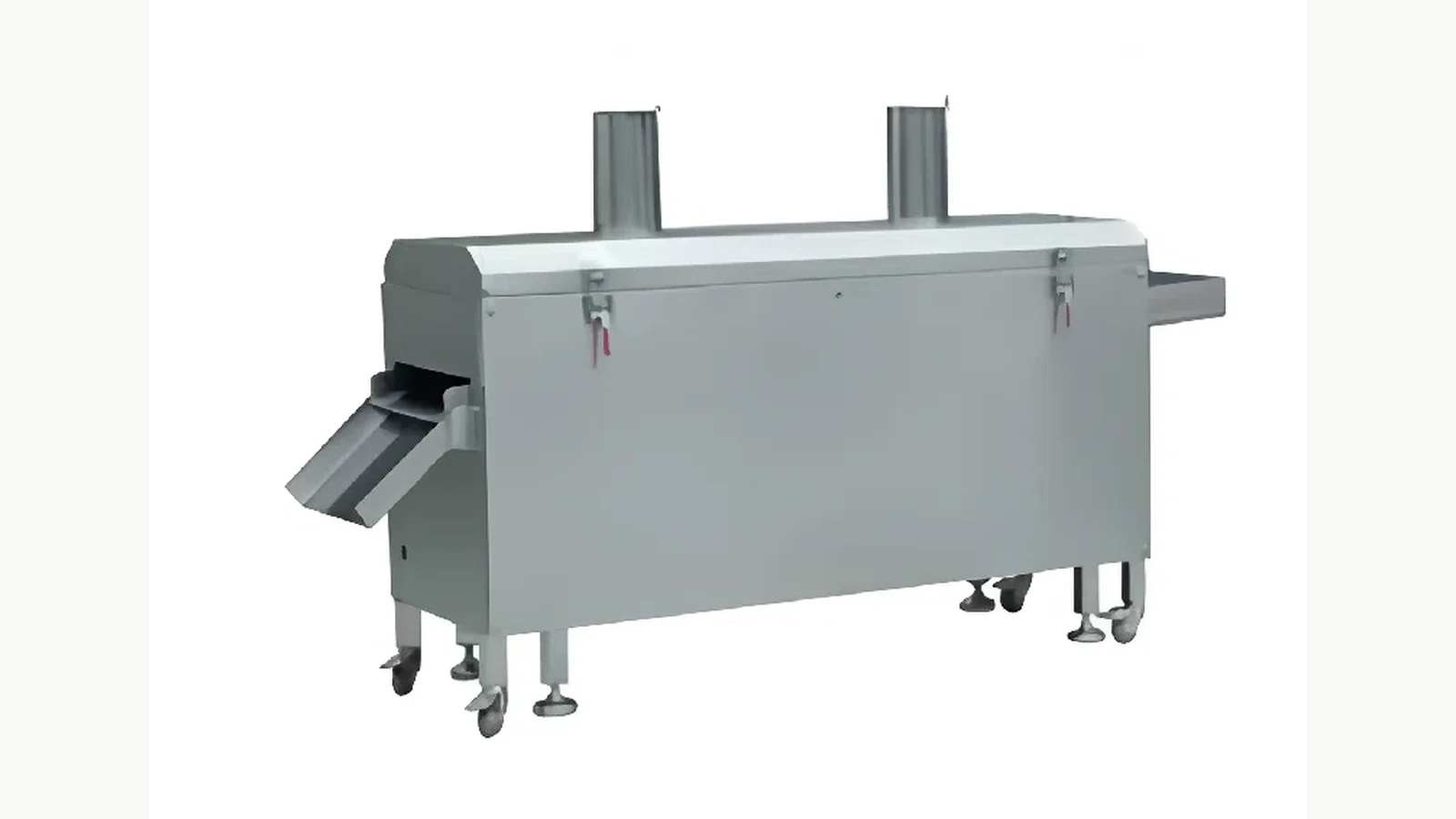
Ask how the supplier sized the dryer and which product basis was used. Relevant inputs include shape, wall thickness, inlet condition, final product target, ambient conditions, heat source and batch or continuous operating method. Drying settings and time should be confirmed during technical review; an equipment image does not prove a universal recipe.
Cooling and packing also need compatible rates. If packaging stops frequently or handles small retail packs, accumulation and buffer handling must be designed into the line.
Match the Model to the Operating Pattern
The same monthly volume can support different equipment choices:
- Long, stable campaigns: a line close to average demand may achieve good utilization when one or two products dominate.
- Frequent shape changes: more reserve may be needed because cleaning and stabilization reduce productive time.
- One-shift startup: a smaller model can preserve capital, provided the building and utilities allow a second shift or later expansion.
- Established distribution: a larger model may be justified when confirmed orders and downstream logistics can absorb the output.
Capacity reserve should have a reason. State whether it covers near-term contracts, maintenance allowance, peak season or future markets. A vague growth percentage can lead to oversized equipment without a workable sales schedule.
Check Utilities, Layout and Material Flow
Before approving a model, confirm voltage, frequency, transformer capacity, cable routes, water, compressed air, heat source and ventilation. The larger the line, the more important factory logistics become.
Map raw-material storage, mixing, extrusion, drying, cooling, packing, finished-goods storage and operator access on the building plan. Leave space for mold handling, cleaning and maintenance. A line that fits by overall length may still be difficult to operate if doors, columns or forklift routes conflict with the equipment.
Use One Acceptance Basis for the Proposal
Ask every supplier to build the proposal around the same product and operating facts. The document should state:
- finished product and representative formula;
- target shape, dimensions and mold list;
- required hourly output and productive schedule;
- complete equipment scope from preparation through cooling;
- packing interface and buffer method;
- installed and practical power basis;
- heat source, utilities and buyer responsibilities;
- commissioning, training and acceptance method.
For a model recommendation, send the normal and peak demand, target shapes, formula, planned shifts, factory drawing, utilities, drying preference, packing scope and destination. Those inputs allow TXF100, TXF200, TXF300 and TXF500 to be compared as complete systems rather than isolated capacity labels.